

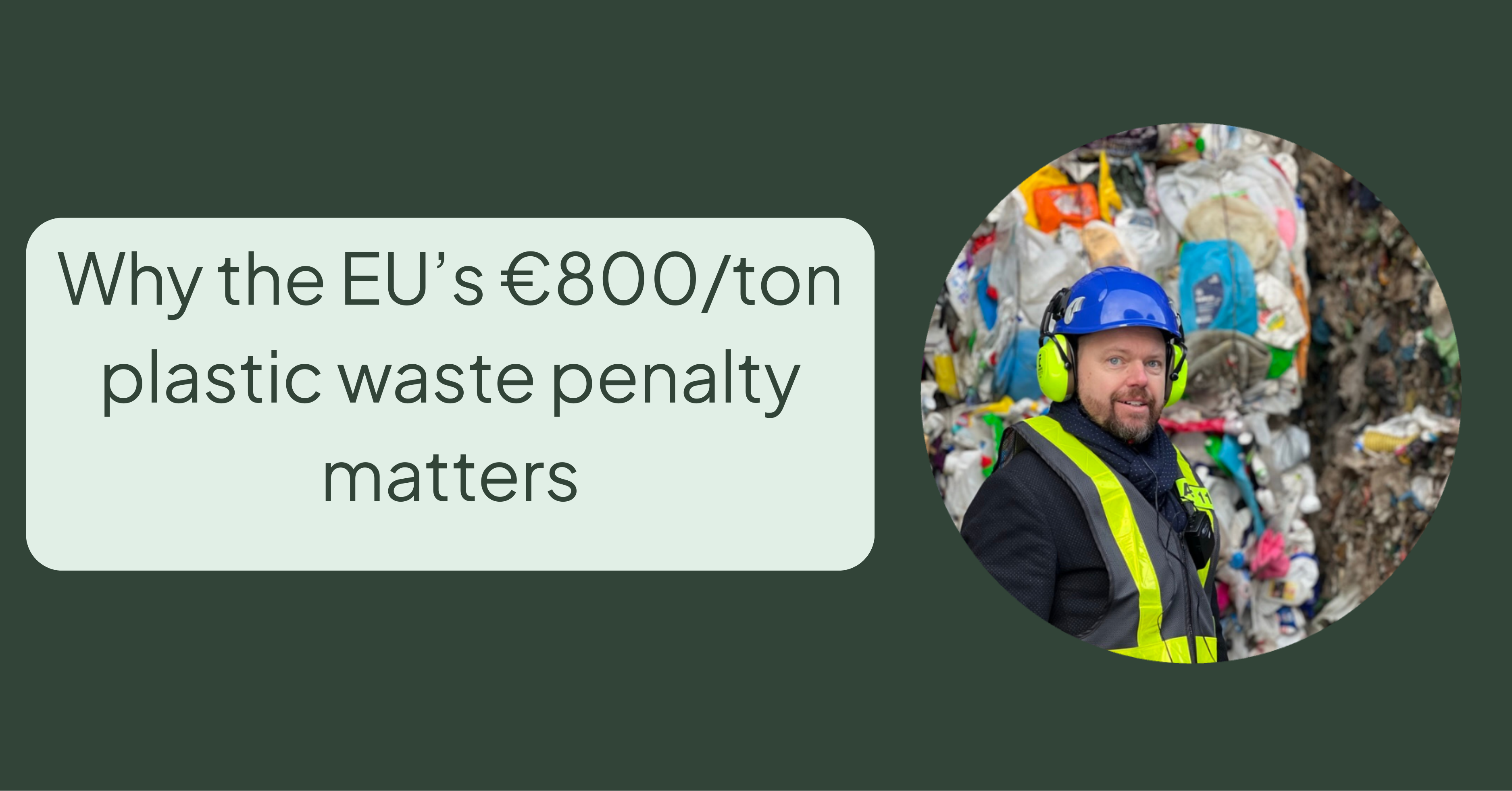
Why the EU’s €800/ton plastic waste penalty matters
In the European Union, member states must pay €800 for every ton of plastic packaging waste that is not recycled. This is part of Europe’s Plastics Strategy, designed to reduce plastic pollution and push governments to improve recycling infrastructure.
For countries with limited recycling systems, this can quickly add up to hundreds of millions in annual penalties. It’s clear: solving the plastic waste problem is no longer just an environmental issue. It is also an economic one.
Recycling is not one-size-fits-all
As Kimmo Kontuniemi from Resiclo explains, traditional mechanical recycling isn’t effective for all plastics. For example, PVC can release harmful gases and corrode machinery during processing. “If we want to scale recycling and reduce the cost of non-recycled plastic, we need innovation,” he says.
That means smarter sorting systems, investment in chemical recycling technologies, and stronger collaboration across the value chain.
Recycling is also a social and economic opportunity
“Recycling is not just about reducing landfill waste—it also saves materials, creates jobs, and supports local economies,” continues Kimmo. But even promising solutions can face a major bottleneck: financing. Many recycling innovations struggle to move forward due to lack of early funding and risk-sharing mechanisms.
Public-private partnerships are key
To meet future recycling targets, Europe needs both public investment and private sector momentum. As Kimmo puts it: “With the right technology and partnerships, we can turn this EU penalty into an opportunity—cleaner materials, stronger industries, and less waste.”
Resiclo is working on just that, developing solutions that aim to make plastic recycling smarter, more scalable, and more aligned with European climate and circular economy goals.
Blog is based on an article by Imane Benahssine for Business Colleague Helsinki
Photo: Kimmo Kontuniemi at one of the world’s largest landfills in Nairobi
0 Comments